Your Own Little Internet: The Rise of Private Digital Spaces Nobody Else Can Get Into
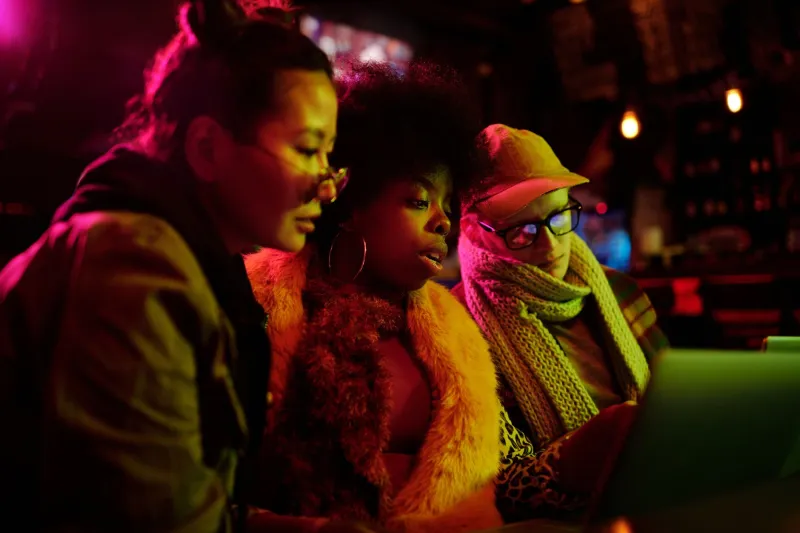
There's a Discord server for people who collect vintage diner menus. Another one for amateur urban geologists in the Pacific Northwest. A private Slack for Black women in fintech. A paid community for people learning to ferment things in small apartments. A members-only forum that's basically just a hundred people who love extremely obscure 70s soul records arguing about liner notes.
None of these will trend. None of them want to. And that's exactly why they're thriving.
While the big platforms are still chasing engagement metrics and fighting off advertiser drama, something quieter and arguably more important has been happening: people are building their own corners of the internet. Small ones. Specific ones. Ones with actual gates.
What's Broken About the Main Feed
To understand why private communities are exploding, you have to understand what mainstream social media has become — and what it's stopped being.
Once upon a time, the appeal of platforms like Facebook and Twitter was connection. You followed people you knew, or people you genuinely wanted to hear from, and the feed reflected that. Then the algorithm got involved. Then the advertisers. Then the influencers. Then the engagement-bait. Then the outrage cycle.
Now the average American scrolls through a feed that's maybe 30% people they actually care about and 70% content optimized to make them feel something — usually anxiety, jealousy, or the vague urge to buy something. That's not a community. That's a shopping mall with a comment section.
What people actually want — and what they're building for themselves — is something that feels more like a neighborhood block party than a stadium concert. Smaller. More intentional. Recognizable faces.
Discord, Slack, and the Architecture of Intimacy
Discord started as a platform for gamers and has quietly become one of the most important community infrastructure tools on the internet. It's organized around servers — essentially private or semi-private spaces that you either get invited to or apply to join. Within each server, there are channels: little rooms for different conversations, topics, or vibes.
What makes it work isn't the technology. It's the structure. There's a reason you can't just stumble onto a good Discord server. You have to know someone, find a link, meet a threshold. That friction is a feature, not a bug. It keeps the space from becoming a free-for-all and gives existing members a reason to actually invest in the culture they're building.
Private Slack communities operate similarly, often with a more professional or creative tilt. Writers' rooms, design collectives, industry peer groups — these are spaces where people share work, ask questions, and build real working relationships without performing for an audience.
And then there are the paid communities: Substack's chat features, Mighty Networks, Circle, Geneva. These add an economic layer that changes the dynamic entirely. When people pay to be somewhere, they're more likely to show up, contribute, and treat the space with care. The creator or organizer, meanwhile, has a sustainable reason to keep investing in the community rather than chasing algorithmic favor.
The Economics of Exclusivity
Here's the thing about private spaces that rarely gets discussed: exclusivity isn't just a vibe thing. It's a functional mechanism.
When a community has unlimited membership, it eventually hits a scale where no one feels known. Researchers who study group dynamics have a name for this — the Dunbar number suggests that humans can maintain stable social relationships with roughly 150 people. Scale past that without intentional structure, and community starts to feel like crowd.
The best private digital spaces understand this intuitively. They cap membership, require applications, or structure things in ways that keep interactions human-sized. Some even deliberately close to new members when they hit a certain size — not because they're being precious, but because they understand that the value of the space is directly tied to how well people know each other.
For creators and community builders, this also means rethinking what success looks like. A Discord server with 400 deeply engaged members who pay $10 a month is generating real revenue and real relationships. A public Instagram account with 40,000 followers might generate neither.
Why These Spaces Feel Different
Ask anyone who's found a genuinely good private community and they'll usually describe it the same way: it doesn't feel like the internet. What they mean is it doesn't feel performative. Nobody's posting for reach. Nobody's optimizing their personality for maximum engagement. People are just... talking.
That's rare online now. Genuinely rare. And the scarcity of it is exactly why people are willing to seek it out, pay for it, and protect it.
There's also a safety element that's hard to overstate. Public platforms are surveillance environments. Everything you say is potentially visible to everyone, forever, and can be screenshotted, quote-tweeted, or taken out of context. Private communities offer something public social media structurally cannot: the ability to be in-process. To share something half-formed. To be wrong in front of people who already know you.
That's not just comfortable. For a lot of people, it's the difference between actually participating and just lurking.
Finding Your Corner
If you haven't found your people in a private community yet, it's less about luck and more about knowing where to look. Most good communities grow through word of mouth — someone who's in one tells someone who'd belong in one. Start with your existing interests and go specific. Not "music" but "music production on a $500 budget." Not "fitness" but "strength training for people over 40 who hate gym culture."
Reddit can be a starting point, but treat it as a map, not a destination. Look for references to Discord servers, newsletters with community components, or Substacks that have active comment sections. Those are often doorways into tighter circles.
And if you can't find exactly what you're looking for? Build it. The barrier to starting a Discord server or a small group chat is essentially zero. The communities that matter most on the internet right now didn't start big. They started with a handful of people who wanted to talk about the same specific thing with the same specific energy.
The Bigger Picture
The shift toward private, niche community spaces isn't a rejection of the internet. It's an evolution of it — toward something that actually serves the people using it rather than the platforms profiting from their attention.
Your corner of the internet is out there. Or it's waiting for you to build it. Either way, it's not going to show up in your main feed.