Slow Replies, No Apologies: Why Going MIA on Your Phone Is the New Self-Care
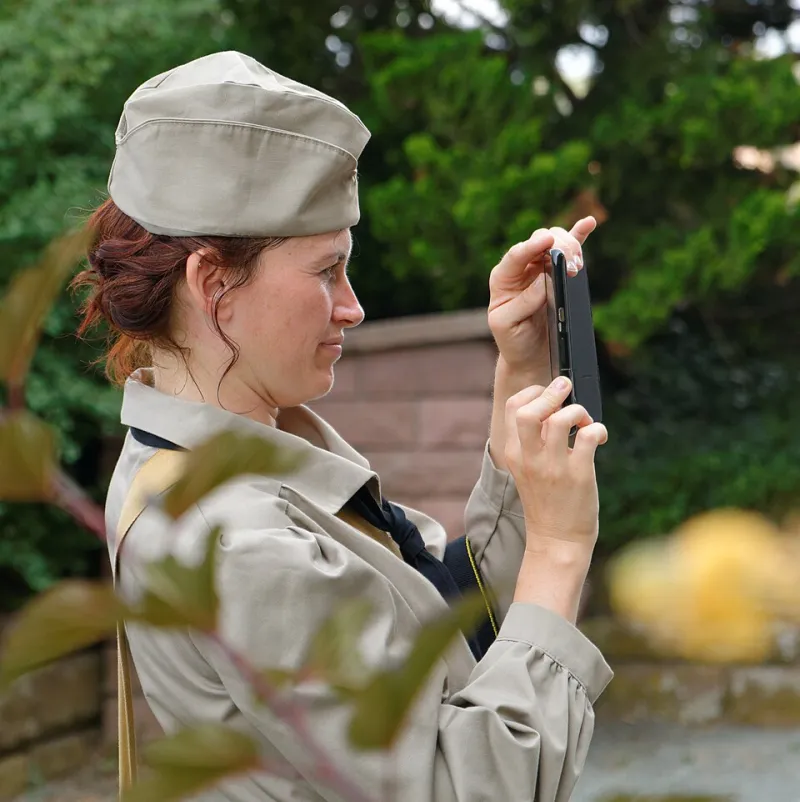
Photo: Thomas Bresson, CC BY 4.0, via Wikimedia Commons
Somewhere along the way, being reachable became a personality trait. If you responded fast, you were reliable, warm, present. If you didn't — if you left a message sitting there for four hours while you, I don't know, lived your actual life — you were cold, flaky, or worse: unbothered in the bad way.
But something has been shifting. Quietly, stubbornly, and without a press release, a growing number of people in the US have stopped apologizing for their response time. They've stopped prefacing every late reply with "ugh, I'm so sorry, I've been INSANE lately" as if their attention is something they owe the world on demand. And honestly? The vibe is contagious.
The Myth of the Perpetually Available Person
Let's be real about what constant connectivity actually costs. Every ping, every notification, every little red bubble is a tiny interruption — a micro-demand on your focus that adds up fast. Researchers have been saying for years that it takes an average of 23 minutes to fully refocus after a distraction. Twenty-three minutes. And most of us are fielding dozens of messages a day across iMessage, Instagram DMs, Snapchat, WhatsApp, Slack, and whatever group chat just came back from the dead.
The math doesn't work. And yet, the social contract we've somehow agreed to says you should respond promptly, enthusiastically, and at all hours — or risk being labeled difficult.
That contract is getting renegotiated.
"I used to feel this low-grade anxiety every time I saw unread messages," says Marcus, a 29-year-old graphic designer based in Atlanta. "Like I owed everyone a response right now. Then I just... stopped. I started treating my phone like a tool instead of a leash. People adjusted. Most of them, anyway."
What 'Bad at Texting' Actually Means Now
The phrase itself is interesting. "I'm bad at texting" used to be an apology — a self-deprecating admission of failure. Now it's being reclaimed as a descriptor, almost a lifestyle declaration. Like saying I'm an introvert or I don't drink — it's information, not an excuse.
For a lot of people, being intentionally slow to respond isn't about ignoring others out of disrespect. It's about resisting the expectation that your attention should be infinitely available and instantly deployable. It's about recognizing that some conversations can wait, and that waiting doesn't diminish their value.
There's also a deeper layer here around who gets your response time. If you're someone who replies to your best friend within seconds but takes a day to get back to a casual acquaintance — that's not being flaky. That's prioritization. That's knowing what (and who) matters.
"I think of my attention like a battery," says Deja, a 32-year-old teacher in Chicago. "I've got a finite amount of it each day. If I spend it responding to every random text the second it comes in, I've got nothing left for the people and things I actually care about. So yeah, I'm selective. I'm not sorry about it anymore."
The Guilt Trip Is Getting Old
Here's where it gets a little spicy. Not everyone in your life is going to love this approach. There's a certain kind of person — and you know exactly who this is — who takes a delayed response as a personal affront. The "k" after three hours. The passive-aggressive "guess you're busy" follow-up. The read receipt accusation.
And look, communication matters in relationships. If someone you love is going through something hard and you ghost them for a week, that's a different conversation entirely. Context always counts.
But the broader cultural expectation that you should be reachable and responsive at all times, to everyone, across every platform? That's not intimacy. That's surveillance. And more people are starting to call it out.
The guilt trip around slow texting is really a guilt trip about autonomy. It's someone saying: your time should be available to me whenever I want it. Framed that way, the pushback makes a lot more sense.
When Silence Is Actually Communication
There's something worth naming here: choosing not to respond is a response. Letting a message sit isn't passive — it's a decision. It communicates that you're not at the mercy of your notifications. That you have things going on beyond your screen. That you'll engage when you're ready, not when you're summoned.
This isn't about being cold or mysterious for the sake of it. It's about having a relationship with your own time that doesn't get overridden every time someone else decides they want your attention.
And culturally, we're starting to see this reflected in how people talk about their digital lives. The aesthetic of being chronically online — always posting, always responding, always on — is losing its shine. The people who seem genuinely enviable now are the ones who feel present in their actual lives. Who aren't checking their phones at dinner. Who don't have their notifications running their nervous system.
Building a Life That Doesn't Revolve Around the Ping
So what does this actually look like in practice? A few things people are trying:
Notification stacking — turning off most alerts and checking messages in intentional blocks rather than reacting in real time. You get to the conversation on your schedule, not theirs.
Honest auto-responses — some people are leaning into transparency, setting expectations upfront. A simple "I check messages once a day" in a bio or a pinned note to close friends goes a long way toward resetting the baseline.
The unapologetic opener — dropping the "sorry for the late reply" preface entirely. Just... responding. As if the delay is normal. Because it is.
Tiered availability — being genuinely fast with the people who matter most, and genuinely okay with being slow with everyone else. Not as a power move, but as a realistic allocation of energy.
None of this requires a manifesto or a social media announcement. It's quieter than that. It's just... stopping. Stopping the reflexive reach for the phone. Stopping the apology for existing offline. Stopping the performance of availability.
Your Attention Is Yours
Here's the thing that doesn't get said enough: your attention is one of the most valuable things you have. Every app, every platform, every notification is competing for a piece of it. That's not a metaphor — that's the actual business model of the internet.
Reclaiming it — deciding who gets it, when, and how much — isn't antisocial. It's one of the more self-aware things you can do in a world designed to scatter your focus into a thousand different directions.
Being "bad at texting" used to be something to fix. More and more, it's starting to look like something to protect.
Your time. Your terms. No apology required.