Found My People in the Weirdest Corner of the Internet — And I've Never Felt Less Alone

Sophia spent the better part of her twenties feeling like the odd one out. She loved vintage synthesizers, obscure Japanese city pop, and propagating rare houseplants. In her mid-sized Ohio town, those interests didn't exactly come up at parties. She had friends, sure. But she rarely felt like anyone really got her.
Then she found a Discord server dedicated to lo-fi music production and houseplant care — yes, both, in the same community, because apparently that overlap exists and it's thriving. Within a week, she'd had more genuinely energizing conversations than she'd had in months offline.
"I know it sounds dramatic, but it kind of changed how I saw myself," she says. "Like, I stopped thinking my interests were weird and started thinking they were just specific. And specific is actually great, because it means the people who share them really mean it."
Sophia's story isn't unusual. Across the U.S., people are finding their most authentic communities not in their zip codes or their alumni networks, but in the hyper-specific digital corners of the internet that were built around exactly what they love.
The Algorithm Accidentally Did Something Beautiful
For all the (very valid) criticism of algorithmic social media, there's one thing it genuinely got right: it got weirdly good at finding your people for you.
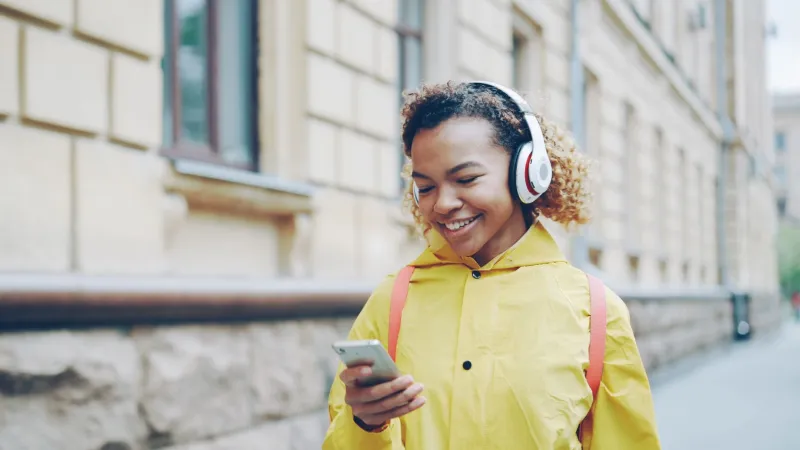
TikTok's "For You" page has become almost legendary in its ability to funnel users into what fans call their corner of the app — SkincareTok, BookTok, CottageCoreTok, FarmTok, you name it. What starts as a passive scroll can, over time, become a genuine community where creators and viewers recognize each other, develop in-jokes, and feel a real sense of shared identity.
This isn't accidental. The more specific your interests, the more the algorithm rewards you with content that actually resonates — and the more you engage with that content, the more you signal to others in that space that you belong there. It's a feedback loop that, at its best, functions like a really good introduction service.
"I found my current best friend through BookTok," says Priya, 26, from Seattle. "We both commented on the same video about a pretty niche fantasy series, started following each other, and now we talk every single day. She lives in Nashville. We've met in person twice. She's one of my closest friends."
Reddit's Quiet Superpower
If TikTok is the flashy new way to stumble into your tribe, Reddit has been quietly doing this for years — and doing it in a way that's arguably more durable.
The platform's subreddit structure means there's a community for essentially every level of specificity. Not just "plants" but r/proplifting, for people who specifically collect discarded cuttings from nurseries and propagate them. Not just "running" but r/ultramarathon, r/c25k, r/fiveKrace — each with its own culture, its own inside language, its own sense of who belongs.
What makes Reddit communities stick, according to users, is the depth of knowledge and the low tolerance for performative engagement. These aren't spaces where you post a selfie and collect likes. They're spaces where you ask a real question and get a genuinely helpful answer from someone who cares about the same thing you do.
Tyler, 33, from Denver, credits a subreddit dedicated to home fermentation with pulling him out of a pretty rough post-pandemic slump. "I'd just moved to a new city and didn't know anyone," he says. "I started posting my sourdough and hot sauce experiments, people gave me feedback, I gave them feedback, and slowly I started to feel like I had a community again. I've since met up with three people from that sub in real life. Two of them are now actual friends."
The Identity Piece Nobody Talks About Enough
Micro-communities aren't just about finding people to talk to. They're also about figuring out who you are — and having that reflected back to you in a way that feels affirming rather than alienating.
For a lot of younger Americans especially, the mainstream cultural script — defined by broad demographics, regional identity, or career path — doesn't leave much room for the nuances of who they actually are. A 22-year-old who's simultaneously into anime, competitive cycling, and experimental jazz doesn't fit neatly into any single cultural box. But online, those intersections become the basis for connection rather than a source of confusion.
Researchers who study online identity formation have noted that participation in niche communities often supports what they call "possible self" development — the process of trying on identities, getting feedback, and gradually building a more coherent sense of who you are and where you belong. In plain terms: finding your niche online can help you figure out your niche in life.
For Kenji, 29, from Los Angeles, an indie gaming Discord server was where he first started openly talking about his creative ambitions. "Everyone in that server was making something — games, music, art. It was just assumed that you were a creator. I'd never really been in a space where that was the default. It made me start taking my own projects more seriously."
Small Spaces, Real Stakes
There's something worth naming here about the size of these communities. The magic of a micro-community often lives precisely in its smallness. A Discord server with 400 highly engaged members can feel more intimate and meaningful than a Facebook group with 40,000 passive ones.
When a space is small enough that people recognize each other, remember past conversations, and notice when someone's been quiet for a while — that's when it starts to function less like a platform feature and more like an actual community. The stakes feel real because the relationships feel real.
And in a cultural moment when loneliness in America has been described by the U.S. Surgeon General as a genuine public health crisis, the idea that a group of 300 people who all love the same obscure hobby can meaningfully reduce someone's sense of isolation is not a small thing. It's actually kind of enormous.
Sophia, back in Ohio, is still in that lo-fi music and plant Discord. She's made friends in four different states. She's collaborated on a music project with someone she met there. She feels, she says, genuinely known.
"My niche used to feel like the thing that set me apart," she says. "Now it's the thing that connects me. That's a pretty big shift."
Your weird little corner of the internet is out there. And honestly? Your people are already in it, waiting.